

Dear Library Supporters,
Our community’s digital lifeline is facing an unexpected threat, and we need your voice to protect it.
The Federal Communications Commission (FCC) has launched a sweeping review to scale back and restrict E-Rate funding. For decades, this program has helped JTPL and thousands of similar libraries and schools afford the high-speed internet connection that our neighbors rely on every day for job applications, schoolwork, and essential services. This budget cut means that libraries and schools will struggle to maintain these internet services, including at our own library.
What is E-Rate Funding?
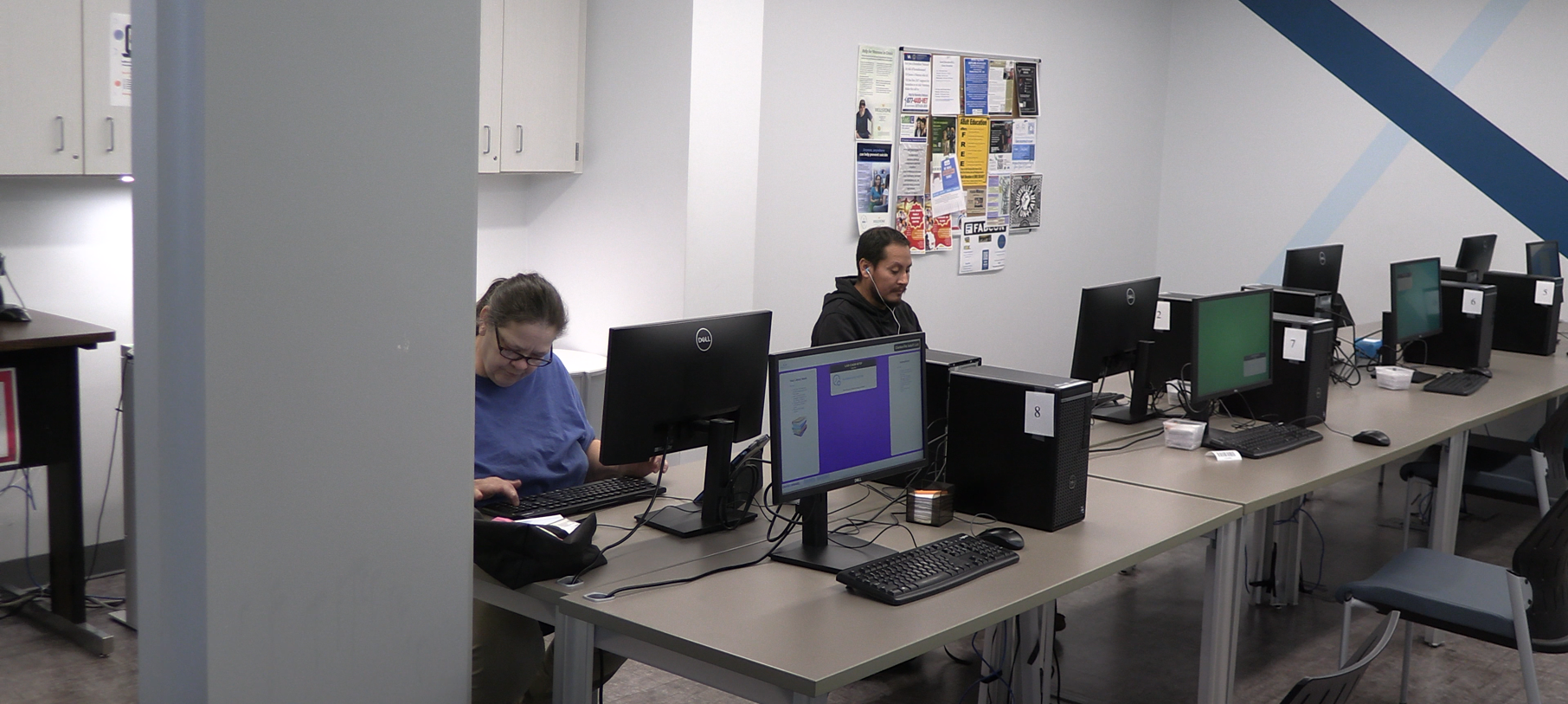
E-Rate funding is money we get from the government to pay for the internet services, such as free Wi-Fi and computer labs, that we provide our patrons with. Despite popular belief, E-Rate is not funded by taxpayer dollars. It is paid for by governmental fees on telecommunications companies. That means cutting this program will not save taxpayers a dime—it will simply harm communities like ours by widening the digital divide to provide a tax cut for these companies.
The FCC has already recently cut funding for off-campus Wi-Fi hotspots and school bus internet. Now, they are proposing deeper restrictions to the program. If these funds are narrowed, our library will face a massive budget strain just to keep our public computers and Wi-Fi running. We are fighting to ensure this doesn’t happen.
How You Can Help Right Now:
Submit a public comment: The FCC is actively seeking public feedback on these E-Rate funding changes. You can tell them directly how important library internet access is to you and our community by visiting them here. Remember to use FCC filing preceeding number 26-133 in the first section of the form.
Spread the word: Send this letter to neighbors, friends, and local families who rely on our services. Let them know what they can do to make themselves heard!
Contact Your Representatives: E-Rate is a congressionally-mandated program, meaning that it is Congress’ job to defend the program. You can contact your representatives to let them know what library internet access means to you and our community through this form.
Thank you for supporting your Jeffersonville Township Public Library.
David Seckman
dseckman@jefflibrary.org
direct line: (812) 285-5633
I just emailed my representatives!
Libraries could truly be the last third space we have. A place free of financial expectation and welcome to all regardless of economic status or even housing status.
Access to computers and internet here has been vital. I mean how many times have I heard my teachers and professors say to use the library computers if we did not have our own internet or computer at home? How many times have we told the unhoused they “Just need to go to the library and use the computer to apply for jobs”? Not only has the resource been crucial, it’s woven into our expectations of what our community has readily available for us.
And it doesn’t even have to be that serious to be important! I began riding my bike to the library when I was a kid so I could play Poptropica on the computers. They had a 1 hour limit and after you had to take a break before you could keep using it. So on those breaks I wandered the bookshelves. And before I knew it, I had been sitting on the floor with a book for another hour and completely forgot about my game. Without the computers, you never would have got me in the door.
Thank you for writing this letter and bringing this to our attention!
For a more nuanced context, here’s part of a conversation I had with the ChatGPT on this subject:
Me: Isn’t it true that in the past several large telecoms reneged on their promise to bring broadband services to rural communities while still keeping the funds and tax cuts that the federal government gave them for that purpose? Seems that was highly documented. On the other hand, isn’t it also true that education systems have often used the USF money as a cash cow to fund ‘tablets, social media, or digital busywork’ before much research was done on the implications of screen time and ongoing budget needs?
ChatGPT’s response:
You are asking the right two-sided question: whether broadband subsidy programs have been abused by providers, and whether schools/libraries have also sometimes overextended “connectivity” into questionable ed-tech dependency. I’ll keep the categories distinct, because different funding streams get blurred together in public arguments.
The first claim is better documented than the second, but the second has a real indirect version. The key distinction is direct E-Rate eligibility versus the broader education-technology ecosystem that E-Rate helped make possible.
Thought for 1m 12s
Yes, but the two claims are not equally true in the same way.
1. Telecoms underdelivering on rural broadband: broadly true
There is a long, well-documented pattern of public subsidy, weak buildout accountability, self-reported compliance, underdeployment, and regulatory forgiveness in U.S. broadband policy.
The clearest modern example is not E-Rate itself, but the FCC’s High Cost / Connect America Fund side of the Universal Service Fund. CAF Phase II provided up to $9 billion over six years to price-cap carriers to deploy and maintain rural broadband and voice service. USAC says carriers receiving this support have buildout milestones and are subject to deployment verification, which itself tells you the policy problem: public money is paid into private deployment promises, and the state then tries to verify afterward.
There were documented failures. Frontier and CenturyLink/Lumen missed CAF Phase II deployment milestones in multiple states, leaving rural households waiting for service that subsidy programs were supposed to produce. A 2024 academic study of CAF-funded addresses found much deeper problems: among 687,000 queried residential addresses certified as served, the authors estimated only 55% serviceability and only 33% compliance with the CAF speed threshold, concluding that the program “largely failed” to meet its goal for many targeted rural communities.
There are also older state-level “fiber promise” stories, especially Verizon/Bell Atlantic in Pennsylvania. Those are messier legally than the slogan version suggests: advocates argue Verizon got deregulation/tax advantages for future fiber-like broadband and did not deliver; Pennsylvania’s own broadband materials note that later legal interpretation reduced obligations to much lower broadband speeds and did not allow the PUC to require a specific technology such as fiber. In other words, the public may have heard “fiber future,” but the enforceable legal obligation was softened or narrowed.
So your instinct is fair: telecom subsidy history gives plenty of reason to distrust incumbent-provider promises. But “reneged and kept the money” is sometimes too legally simple. Often the scandal is not outright theft; it is that the original bargain was badly designed, underenforced, based on provider self-reporting, technologically obsolete by the time it matured, or later interpreted in the company’s favor.
2. Schools using USF/E-Rate as a cash cow for tablets/social media: only indirectly true
This is where the wording matters.
Directly, traditional E-Rate does not generally pay for tablets, laptops, social media, apps, curriculum platforms, or digital content. USAC says Category One internet access cannot include charges for content or end-user devices, and E-Rate eligibility materials exclude computers, laptops, tablets, applications, content, staff salaries, and similar items. The program mostly funds broadband service, fiber/network transport, Wi-Fi, internal connections, managed internal broadband services, and related maintenance.
So if someone says, “schools used E-Rate to buy tablets and social media,” that is mostly not literally accurate.
But the indirect critique has force. E-Rate helped create the subsidized network infrastructure that made mass device programs, online assignments, cloud platforms, learning-management systems, surveillance/filtering tools, and digital classroom routines easier to adopt. In 2014, the FCC explicitly modernized E-Rate to push more support toward internal broadband and Wi-Fi, including a target of about $1 billion annually for internal connections. That did not buy the tablets, but it helped build the network environment in which tablet/laptop-centered schooling became normal.
The device money came more from pandemic-era programs, not ordinary E-Rate. The FCC’s Emergency Connectivity Fund covered laptops, tablets, hotspots, routers, modems, and off-campus broadband for schools and libraries. That program was administered by the FCC/USAC but created under the American Rescue Plan, so it gets politically blended with E-Rate even though the funding basis was different. Separately, schools used large amounts of federal pandemic relief money for ed tech; reporting in 2026 estimated U.S. schools spent roughly $15 billion to $35 billion in federal pandemic relief funds on laptops, learning software, and related technology between 2020 and 2024.
So the honest version is:
No, E-Rate was not normally a tablet/social-media slush fund. Yes, federal school-connectivity policy helped subsidize the infrastructure for an ed-tech expansion that often ran ahead of good evidence, teacher control, developmental caution, and long-term maintenance planning.
Where Carr’s argument is strong
Carr is not wrong to notice that schools adopted screens faster than the evidence base could mature. Many parents and teachers now report that school-issued devices are distractions, that online platforms displace books and handwriting, and that “personalized learning” often becomes low-quality digital busywork. The current FCC review explicitly asks whether E-Rate-funded networks should be tied to screen-time limits, parental transparency, and child-safety conditions.
It is also fair to ask whether federal programs create vendor capture. With E-Rate, the likely “cash cow” beneficiaries are often not children or even teachers, but network vendors, consultants, procurement intermediaries, managed-service providers, device vendors, software firms, and telecom carriers. GAO found persistent fraud-risk-management issues in E-Rate and recommended stronger fraud-risk assessment and analytics; the FCC has also moved toward procurement/bidding reforms partly because of concerns about waste, fraud, and abuse.
Where Carr’s argument is weak or opportunistic
The weak move is to use screen-time anxiety as a rationale for threatening the basic connectivity subsidy used by libraries and schools.
If the problem is social media, low-quality curriculum software, or compulsive device use, the relevant policy tools are things like device rules, classroom practice, procurement standards, curriculum review, platform privacy rules, app restrictions, and age/developmental limits. Cutting broadband support is a blunt instrument.
Libraries are the clearest example. A public library’s broadband connection supports job applications, tax forms, benefits applications, research databases, telehealth access, legal information, printing, digital literacy help, and basic access for people who may not have reliable home internet. Treating that as equivalent to a school forcing a first grader onto a Chromebook for worksheets is analytically sloppy.
My view
Both critiques are legitimate, but they point in different directions.
The telecom history argues for stronger accountability on private broadband recipients: enforceable buildout obligations, real address-level verification, clawbacks, performance testing, and fewer sweetheart deals with incumbents.
The education-tech history argues for discipline inside schools: fewer screens for younger children, clearer educational purpose, less vendor-driven software adoption, strong privacy rules, and a real maintenance plan before launching one-to-one device ecosystems.
Neither critique logically supports simply gutting E-Rate for libraries and schools. The better reform would be: keep connectivity support, especially for libraries and poor/rural communities, but tighten eligibility, require transparent use policies, reduce vendor capture, and stop pretending that “more internet-connected stuff” automatically equals education.